How Much Postage Does a Wedding Invitation Need?
It's one of those questions that feels like it should have a simple answer. You have a beautiful invitation suite in hand, guests to reach, and a mailing date on the calendar. How hard can postage be?
Harder than it looks, as it turns out - and getting it wrong can mean invitations returned for insufficient postage, envelopes that arrive looking like they survived something, or an awkward "postage due" notice landing in your guests' mailboxes before they ever see the beautiful thing inside. This guide walks you through everything you need to know before you head to the post office.
Why a Forever Stamp Is Almost Never Enough
The standard Forever stamp currently covers a one-ounce, rectangular, non-rigid, machine-processable letter. Your wedding invitation suite is almost certainly none of those things. Most invitation suites include an outer envelope, an inner envelope with envelope liner, the invitation itself, one or more enclosure cards (details card, accommodations card, map, etc.), a reply card, and a reply envelope. That stack of beautifully printed cardstock adds up quickly, and once you cross the one-ounce threshold, you'll need additional postage. The more important issue, though, is that weight is only one factor. The shape and contents of your envelope matter just as much.
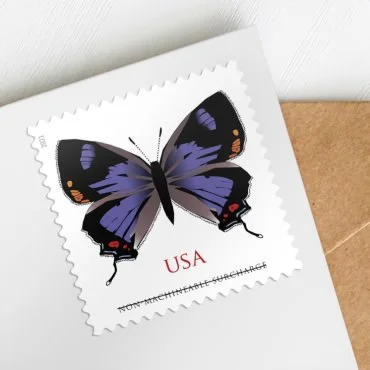
The Non-Machinable Surcharge:
What It Is and Why It Almost Always Applies
USPS defines "non-machinable" mail as anything that cannot pass cleanly through automated sorting equipment. For wedding invitations, this is less of a risk factor and more of a near-certainty.
Your suite likely qualifies as non-machinable if it:
Weighs more than one ounce
Is square or close to square in shape
Contains anything that creates an uneven surface or thickness - a wax seal, a ribbon, a vellum wrap, different materials, layered enclosures, or heavier cardstock
Is too rigid to flex through a sorting machine
The current non-machinable rate (as of 3/30/26) is $1.27 for domestic mail. That's the total postage needed for a non-machinable letter up to one ounce - not an add-on to a Forever stamp. For heavier suites, you'll need additional postage on top of that.
The only way to know exactly what your suite requires is to take a fully assembled sample to the post office and have it weighed and measured. Bring one complete envelope, sealed and ready to mail, exactly as you intend to send it. A larger post office will typically give you more accurate guidance than a smaller branch. And if someone tells you a single Forever stamp is sufficient - ask to speak with a supervisor. It almost certainly isn't.
Wax Seals, Ribbons, and Other Beautiful Complications
Two of the most popular invitation embellishments - wax seals and velvet or silk ribbons - both affect postage, and it's worth understanding why before you fall in love with either (or both).
Wax seals create a raised, rigid bump on or below the envelope surface. This makes the envelope non-machinable by definition and can also cause damage if it passes through sorting equipment. A wax seal means your invitations need to be handled by hand from the moment they enter the postal system.
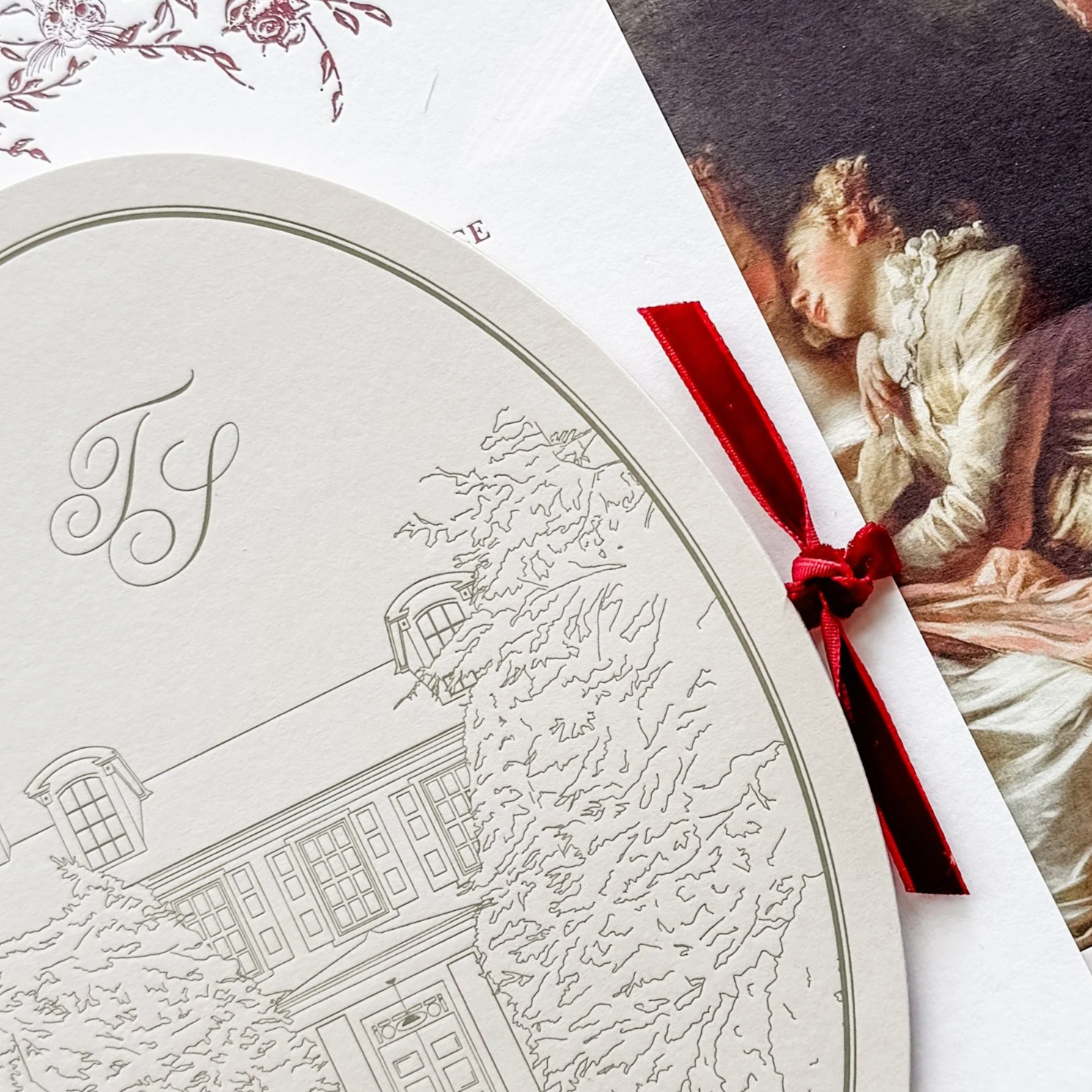
Ribbons wrapped around an invitation suite create a similarly uneven surface. Even a thin velvet ribbon adds bulk and bumpiness that takes your envelope out of the machinable category. If your suite includes a ribbon, plan for the non-machinable rate and make sure the postal employee handling your invitations knows to place them with non-machinable items - this helps ensure they're routed for hand sorting rather than fed into a machine.
Both are worth the postage implications, for what it's worth. They just require going in with eyes open.
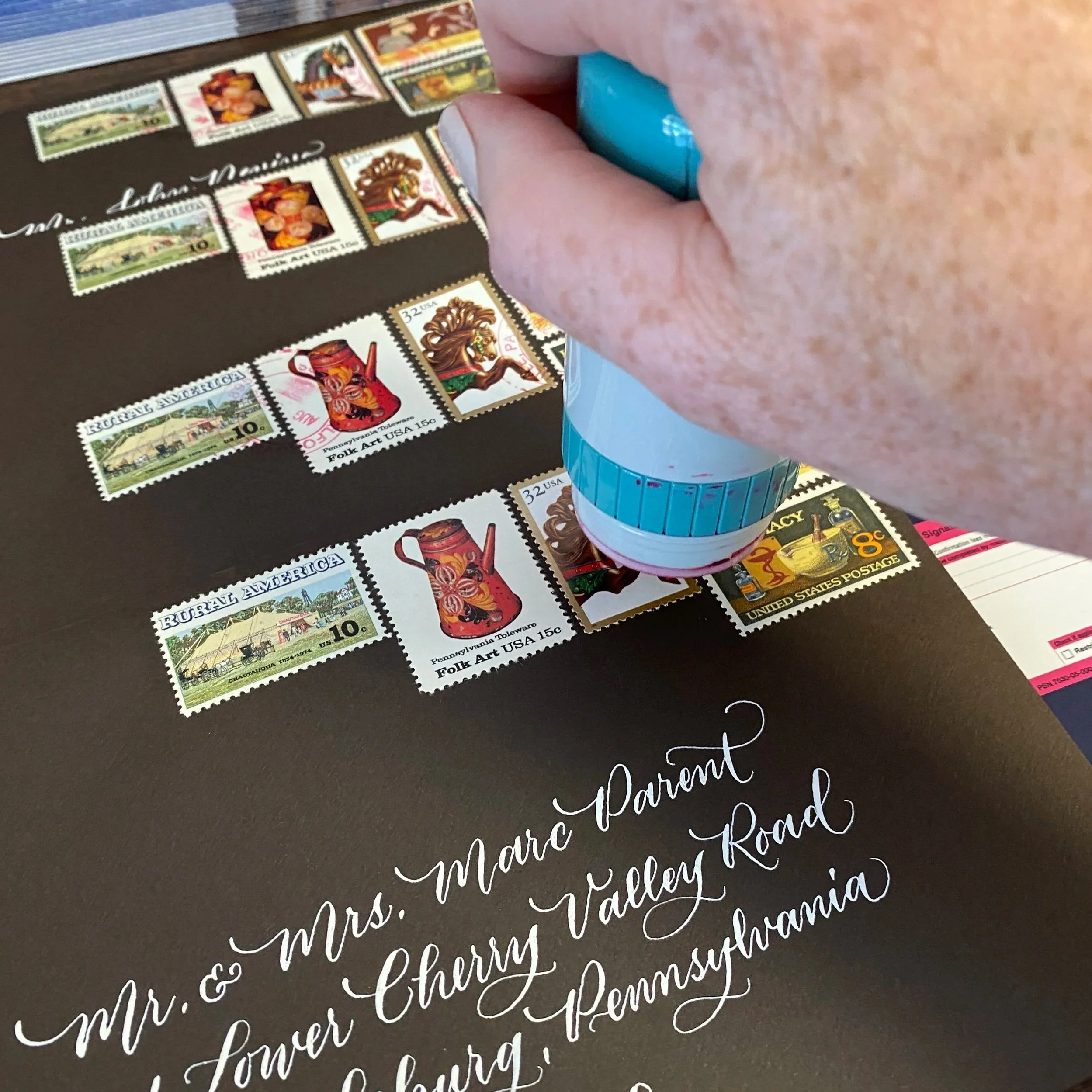
Hand-Canceling:
What It Is and Why I Recommend It
Hand-canceling means a postal employee stamps your envelopes by hand to mark them as postage-paid, rather than running them through a machine that applies the cancellation automatically. It does not guarantee your invitations will never touch a machine at any point in their journey, but it does eliminate at least one machine process, and that matters.
When you bring your invitations to the post office, ask specifically if they hand-cancel. If they say no, take your invitations to a different location. It's worth the extra trip. I also recommend going when the post office first opens, when it's quieter and the staff have more time to give your invitations the attention they deserve. And if you want to make a genuinely good impression on the people handling your mail - a box of donuts and some coffee goes a long way. I am completely serious about this.
A Note on International Guests
If you have guests outside the United States, set those envelopes aside before you begin. International mail requires entirely different postage, and the rates vary by destination. You will not put stamps on the reply envelopes for international guests, either, since a US stamp is useless to someone mailing from abroad. Pull those reply envelopes out of the stack before you begin assembling.
On Stamps Themselves: Forever, Vintage, and Decorative
This is where I have many opinions.
The Forever stamp is exactly what it sounds like: it's valid for first-class postage regardless of when you bought it or what the current rate is. If rates increase between now and your mailing date (and USPS has signaled another increase is coming in mid-2026), Forever stamps you purchased earlier will still be accepted at full value. They're a smart buy for that reason alone.
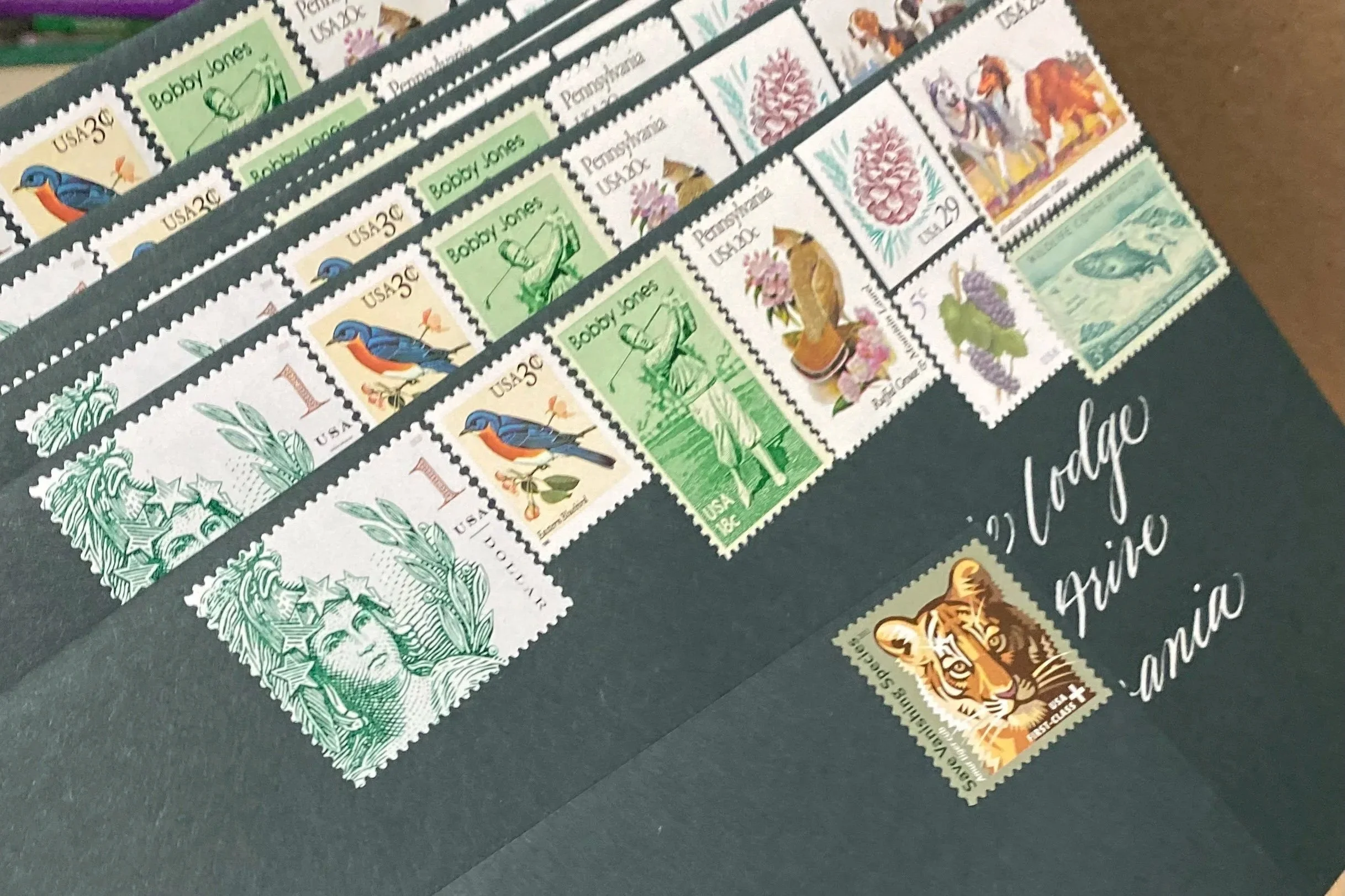
But postage is also something your guests will notice, whether consciously or not. A generic flag stamp on a beautifully designed envelope is a small missed opportunity. USPS releases new stamp designs throughout the year, and there are usually some lovely or unique options - florals, nature imagery, history, art-forward designs - that complement a stationery suite rather than compete with it. It takes about five minutes to browse what's currently available, and it's one of those quiet details that adds up.
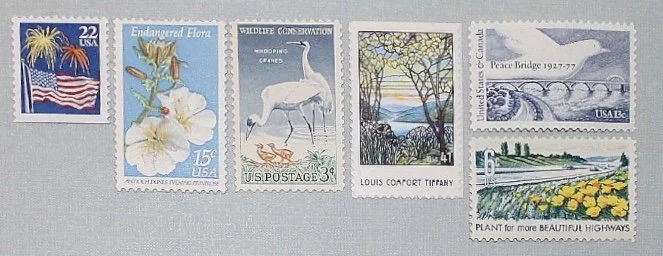
Vintage postage deserves its own mention (and honestly, its own post someday). It has been very popular in recent years, and for good reason. Vintage US stamps carry a personality and warmth that no current issue can quite replicate, and when they're paired with hand-calligraphed addressing, the envelope itself becomes something people want to keep. I've had clients tell me that guests framed their envelopes and hung them in their entryways. That's not a small thing.
A few things worth knowing if you're considering it: vintage stamps typically cost more than their face value, sometimes significantly so, depending on the era and design. They're an investment in the overall experience, not a budget shortcut. I work with couples and stamp collectors to build curated sets that are specific to them - their color palette, where they live, their hobbies, the feel of their wedding - so the postage feels as considered as everything else on the envelope. If you go this route, make sure you're purchasing from a reputable source and that the stamps are verified unused; a stamp that's been previously used isn't valid for postage, regardless of how beautiful it is.
One practical note: for reply card envelopes, a single Forever stamp is typically sufficient, since they're lightweight and standard in size. This is a fine place to use a functional stamp and save the more considered choices for the outer envelopes your guests will actually see first - but there are still plenty of options available.
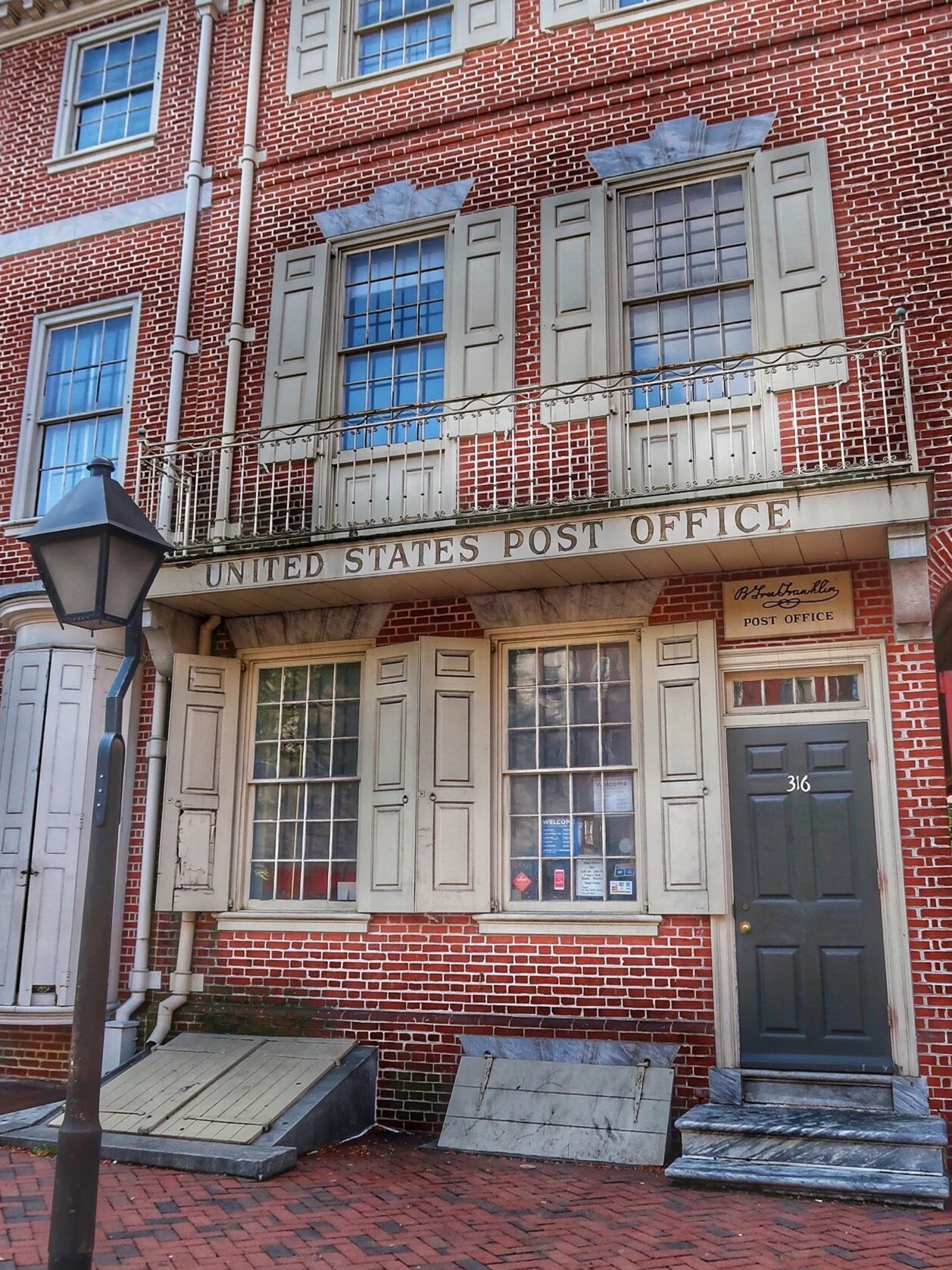
A Quick Reference Before You Go to the Post Office
Assemble one complete sample invitation, exactly as you intend to mail it
Take it to a larger post office to be weighed and measured
Ask specifically about the non-machinable rate if your suite includes a wax seal, ribbon, or substantial enclosures
Request hand-canceling; if that location doesn't offer it, find one that does
Set aside international invitations - they require separate postage and no reply envelope stamps
Check current USPS rates before purchasing in bulk; rates are subject to change
Postage is rarely the most glamorous part of the invitation process, but the stakes are real. I've heard from a client whose friend mailed her entire run of invitations only to have them all returned days later for insufficient postage. Every single one needed a new envelope and new postage before they could go out again. The delay, the cost, and the stress of that situation were entirely avoidable. Handling postage carefully means your guests' first experience of your wedding is exactly what you intended. That's worth a little extra attention at the post office.
If you're working with Stone Hill Paperie, I'm happy to walk you through the mailing process as part of your project. Custom clients also have the option of our full seal and send service -- which means your invitations go out without you lifting a finger. Reach out here if you'd like to learn more.