How to Use QR Codes Beautifully in Your Wedding Stationery
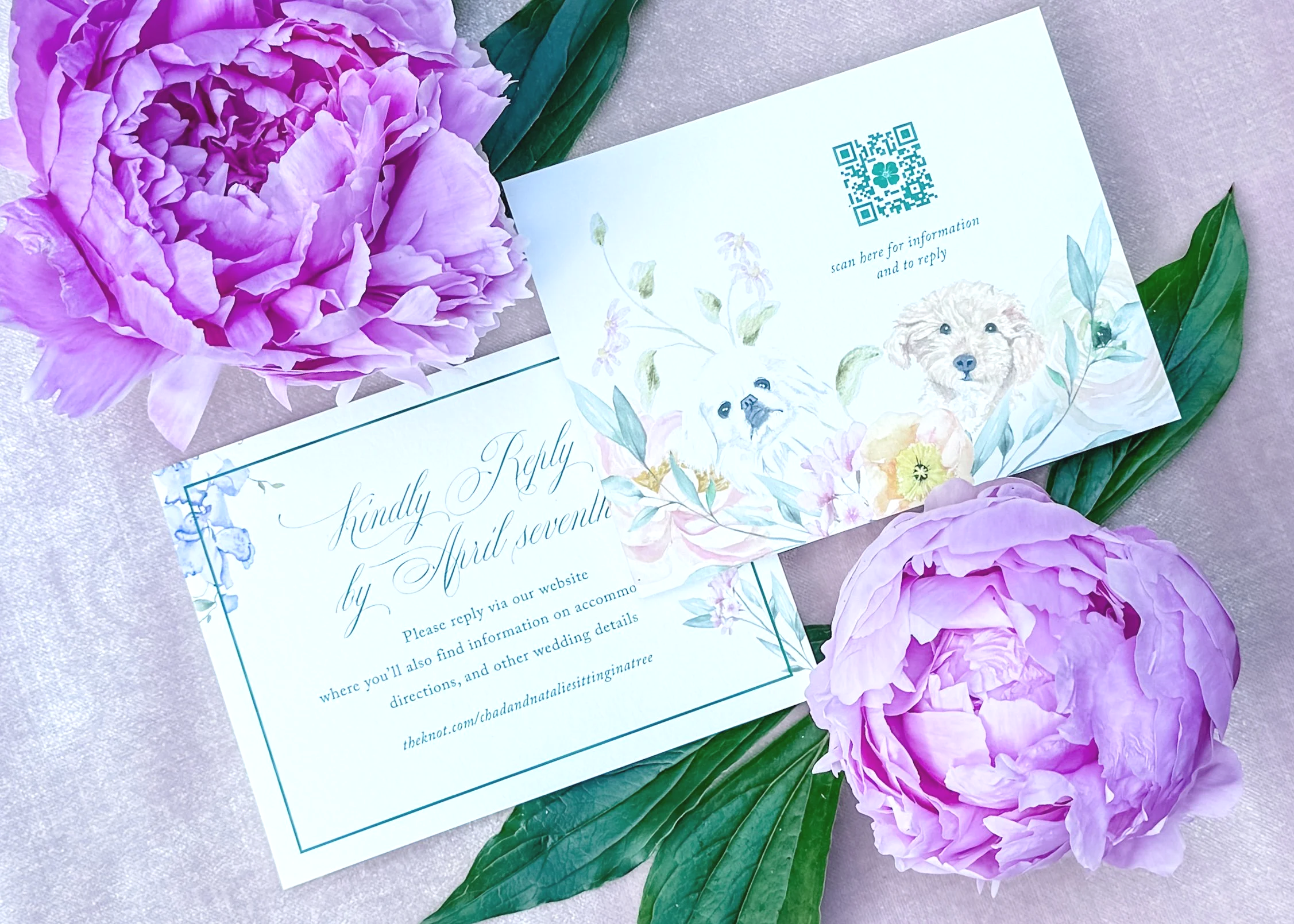
Wedding response card with a QR code placed discreetly on the back of the card amid watercolor flowers and the couple’s pups.
QR codes may not be the most attractive or romantic detail in a wedding invitation suite, but they can be incredibly helpful to your guests.
For many couples, a QR code makes it easier for guests to reply online, visit the wedding website, view weekend details, or find information that may change as the wedding gets closer. I use them most often on response cards when guests are replying online, but there are many thoughtful ways to include them throughout the full stationery experience.
The key is using them with intention.
A QR code should never feel like an afterthought. With the right placement, wording, color, and design treatment, it can become a quiet, useful part of the guest experience without taking away from the beauty of the printed piece.
Why couples are using QR codes in wedding stationery
Wedding stationery has always served two purposes: to set the tone for the celebration and to guide guests clearly through the details. QR codes can support both, especially when there is information that belongs online or may need to be updated later. They can help guests RSVP, find hotel information, review transportation schedules, explore a wedding website, or access instructions tied to a specific guest detail. They are especially helpful when you want the printed invitation suite to feel clean and elegant, without overwhelming the design with too much information. Instead of trying to fit every hotel block, shuttle time, dress code note, registry detail, and weekend event onto several printed cards, a QR code can create a graceful bridge between the printed piece and the digital information your guests need.
Where to include a QR code in your invitation suite
The most common place to include a QR code is on a response card, especially when guests are replying online. In this case, the card still feels like a traditional part of the suite, but it directs guests to the wedding website or RSVP page. This is often a lovely solution for couples who want the ease of online replies, but still want the invitation suite to feel complete and considered. A QR code can also be included on a details card when the information may shift closer to the wedding. Transportation schedules, shuttle pickup locations, welcome party details, parking instructions, or weekend itineraries can all change as plans are finalized. In those cases, linking guests to a page that can be updated is much easier than trying to reprint a card later. It can also be placed on the back of a card when the front needs to feel more formal, traditional, or visually quiet. This is one of my favorite approaches when a couple loves the convenience of a QR code, but parents or family members are hesitant about seeing it front and center. It is still there. It is still helpful. It simply does not have to be the first thing guests see.
When a QR code is the right choice
A QR code is most useful when it makes the guest experience easier. It may be the right choice if guests need to reply online, visit a wedding website, access information that may change, or find details that would be too much to include gracefully in print. It can also be a great solution for more creative guest experiences. One recent example I loved was using a QR code on the back of escort cards that contained wildflower seeds. Guests could scan the code to find instructions for planting them. In that case, the QR code was not just practical. It became part of the experience. That is the sweet spot.
A QR code should not feel like a shortcut or a compromise. It should feel like a thoughtful way to help guests interact with the wedding details more easily.
When to skip the QR code
Not every piece of information needs to live behind a QR code. If a detail is essential for every guest to know immediately, it may still belong in print. Ceremony location, reception address, reply deadline, dress code, and certain timing details should be easy to find at a glance. The goal is not to make guests scan for every answer. The goal is to use a QR code where it adds ease. A good rule of thumb: if the QR code makes the experience clearer, simpler, or more flexible, it may be worth including. If it makes guests work harder, it probably is not the right solution.
How to make a QR code feel more beautiful
QR codes are helpful, but they are not naturally beautiful. Thankfully, there are several ways to make them feel more considered within the design.
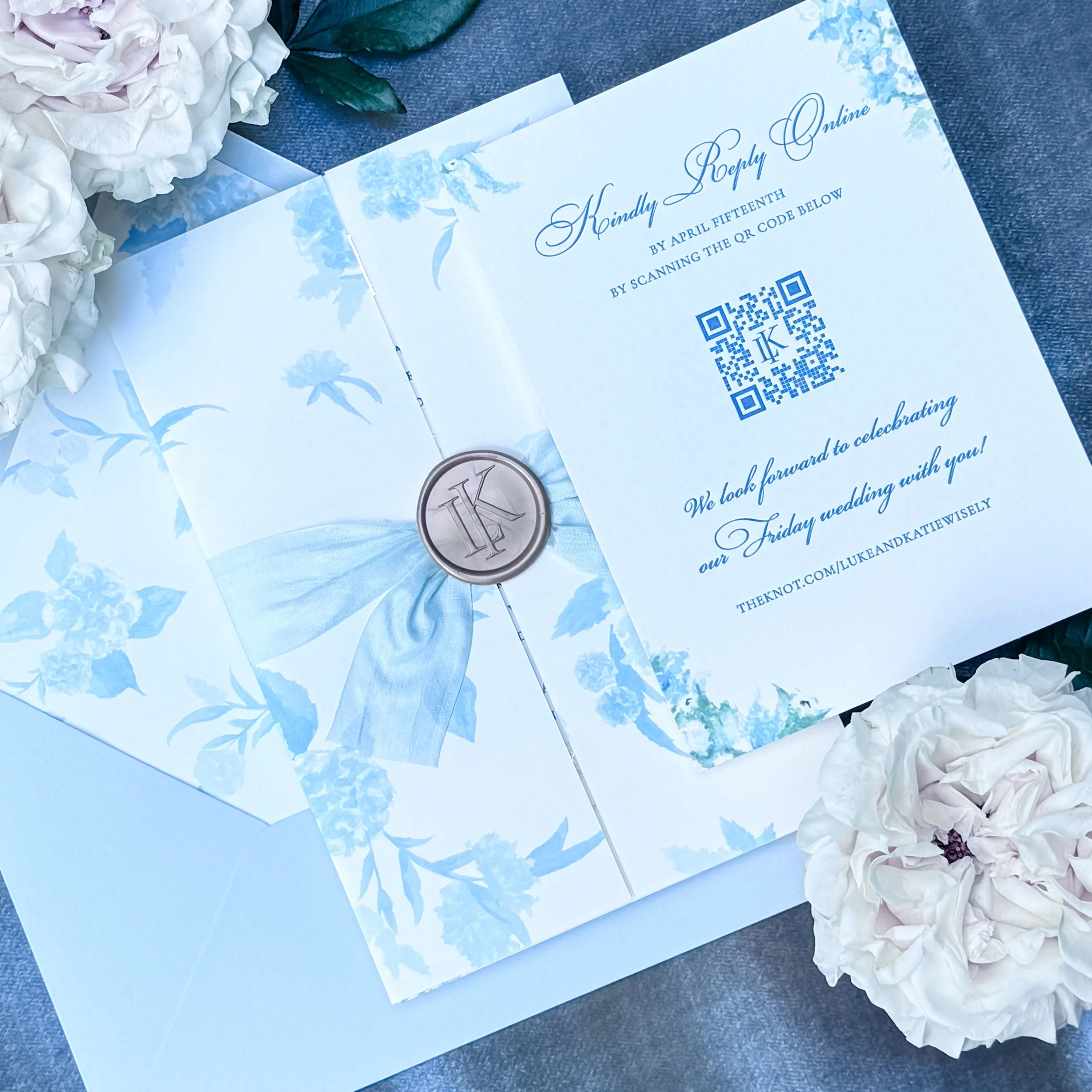
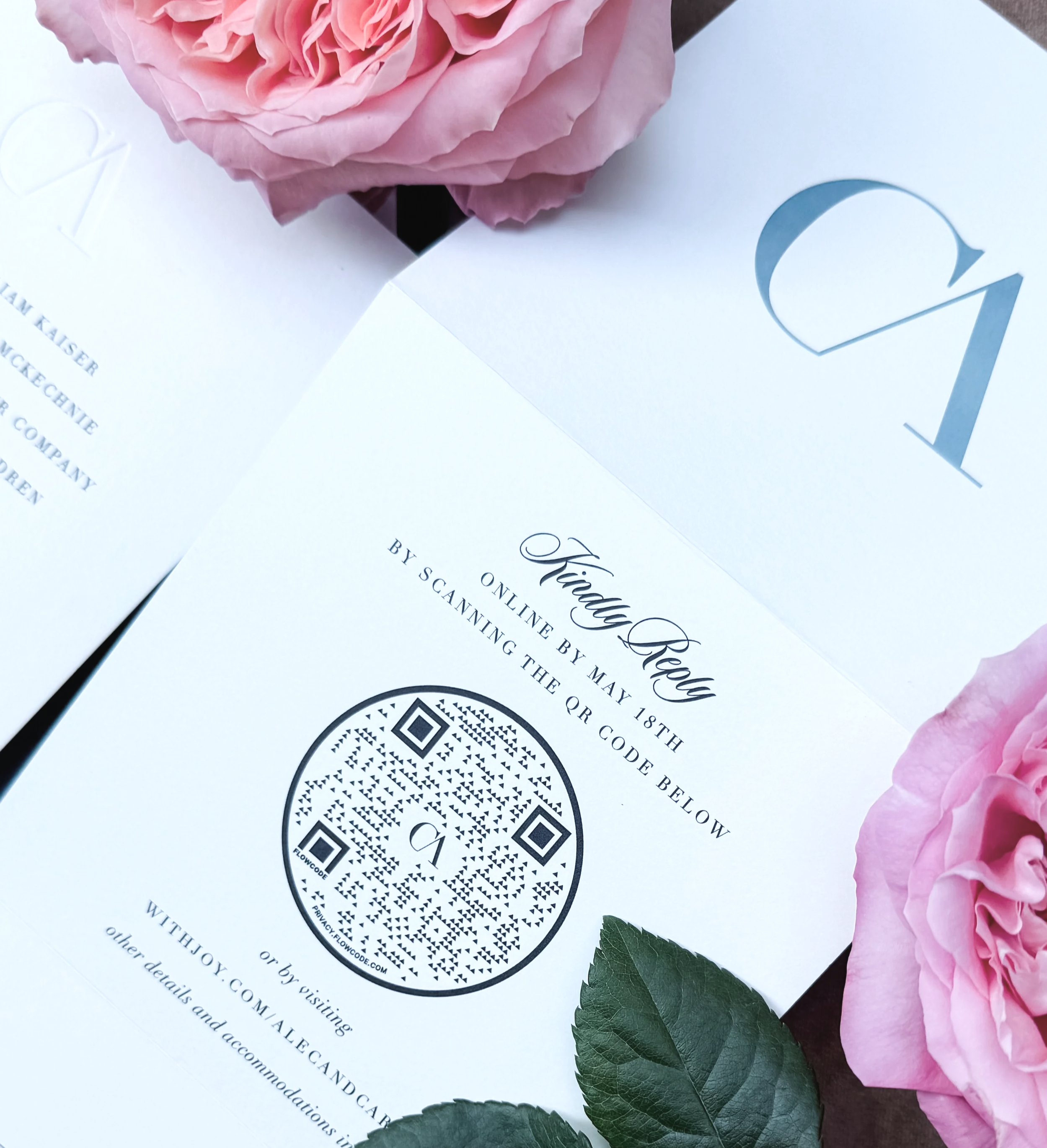
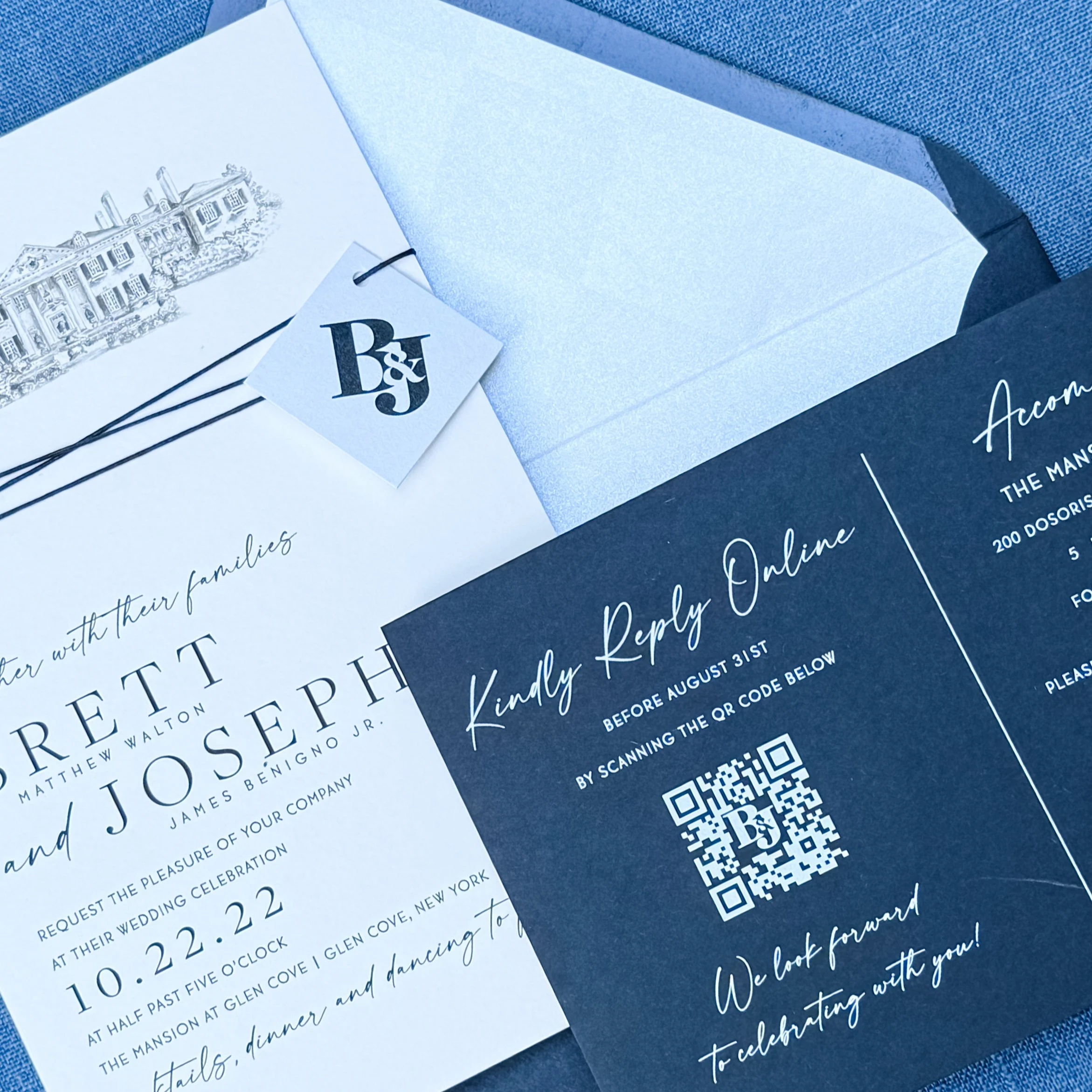
One option is to adjust the color so it coordinates with the invitation suite. A softer ink color or a shade pulled from the palette can help the QR code feel less stark, while still keeping it easy to scan.
Whatever it is, the way you tell your story online can make all the difference.
The shape of the code can also be adjusted. Dots can sometimes feel softer than standard squares, especially when the rest of the design includes more delicate artwork, rounded shapes, or romantic details.
Another option is to add a monogram or small illustration in the center. This can make the QR code feel more custom and connected to the rest of the stationery, rather than something dropped in at the last minute.
Placement matters, too. A QR code needs breathing room. When it is crowded into a corner or squeezed between text, it feels more utilitarian. When it is given space and paired with thoughtful wording, it can feel intentional. Even a simple line such as “Kindly reply online” or “Scan for weekend details” can help guests understand exactly what to do.
What if parents do not love the idea of a QR code?
This comes up more often than you might think. Some parents love the ease of online RSVPs. Others still prefer the formality of a traditional response card. Both perspectives are understandable.
The good news is that this does not have to be all or nothing. A response card can still feel classic and beautifully printed, with the QR code placed discreetly on the back. The wording on the front can remain refined and traditional, while the back gives guests an easy way to reply online.
Another option is to include both the wedding website and QR code, so guests who prefer typing in the address can still do so.
The design can honor the formality of the occasion while still giving guests the convenience they expect.
A few thoughtful ways to use QR codes
Here are a few ways I have used QR codes in wedding stationery:
A response card that directs guests to reply online
A discreet QR code on the back of a card when the front needed to feel more formal
A details card linking to transportation information that may change closer to the wedding
An escort card with wildflower seeds, where the QR code led guests to planting instructionsEach of these uses served a specific purpose. That is what makes the difference.
A QR code should not be added simply because it feels modern. It should be added because it helps guests, supports the design, or creates a more seamless experience.
The bottom line
Wedding stationery can be beautiful and practical at the same time. A QR code may not be the detail that makes your heart skip a beat when you open an invitation suite, but when it is used thoughtfully, it can make the guest experience smoother, clearer, and more connected. The most elegant stationery is not just lovely to look at. It is also intentional.
Every piece has a purpose. Every detail feels considered. And sometimes, that includes a tiny square that helps your guests get exactly where they need to go.
Ready to create wedding stationery that is both beautiful and beautifully useful? I’d love to help you design a suite that feels thoughtful, personal, and entirely your own. Inquire Here