What to Decide Before You Design Your Save the Dates
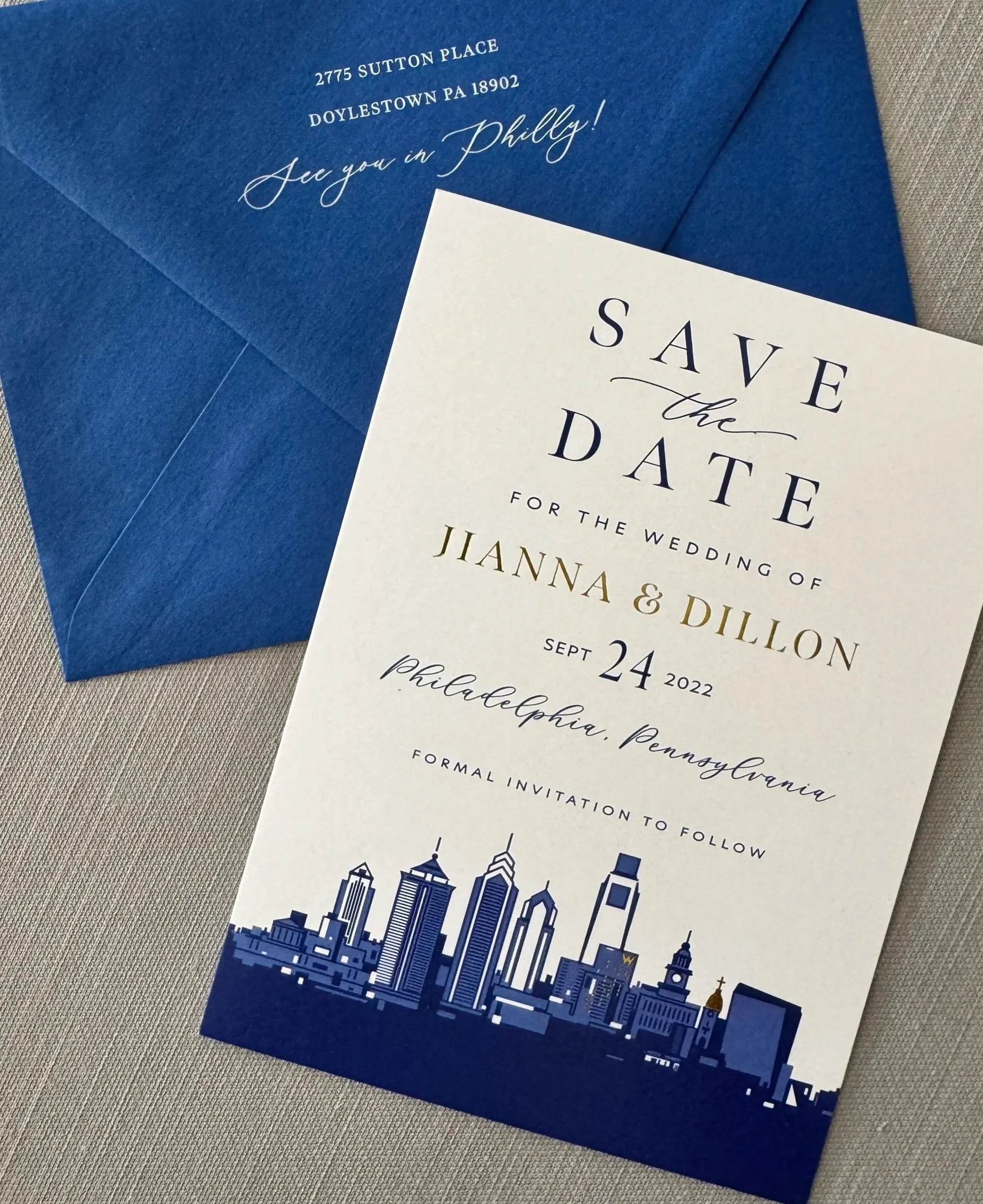
Getting engaged is exciting—and often a little disorienting. One moment you’re celebrating, and the next you’re being asked questions about dates, venues, guest counts, and details you may not have fully decided yet. Save the dates are often treated as the first thing couples are supposed to do. But thoughtful Save the Dates don’t come from rushing to design. They come from clarity. Before choosing paper, type, or format, there are a few quiet decisions worth making. Not because they complicate the process, but because they simplify everything that comes next. If you’re feeling unsure where to begin, you’re not behind. You’re right on time.
Your Wedding Location (and how settled it really is)
One of the most important things to consider before designing your Save the Dates is how finalized your location truly is. If your venue is confirmed, this gives your save the dates a clear sense of place. If it’s not, that’s more common than you might think, and it doesn’t mean you can’t move forward thoughtfully.
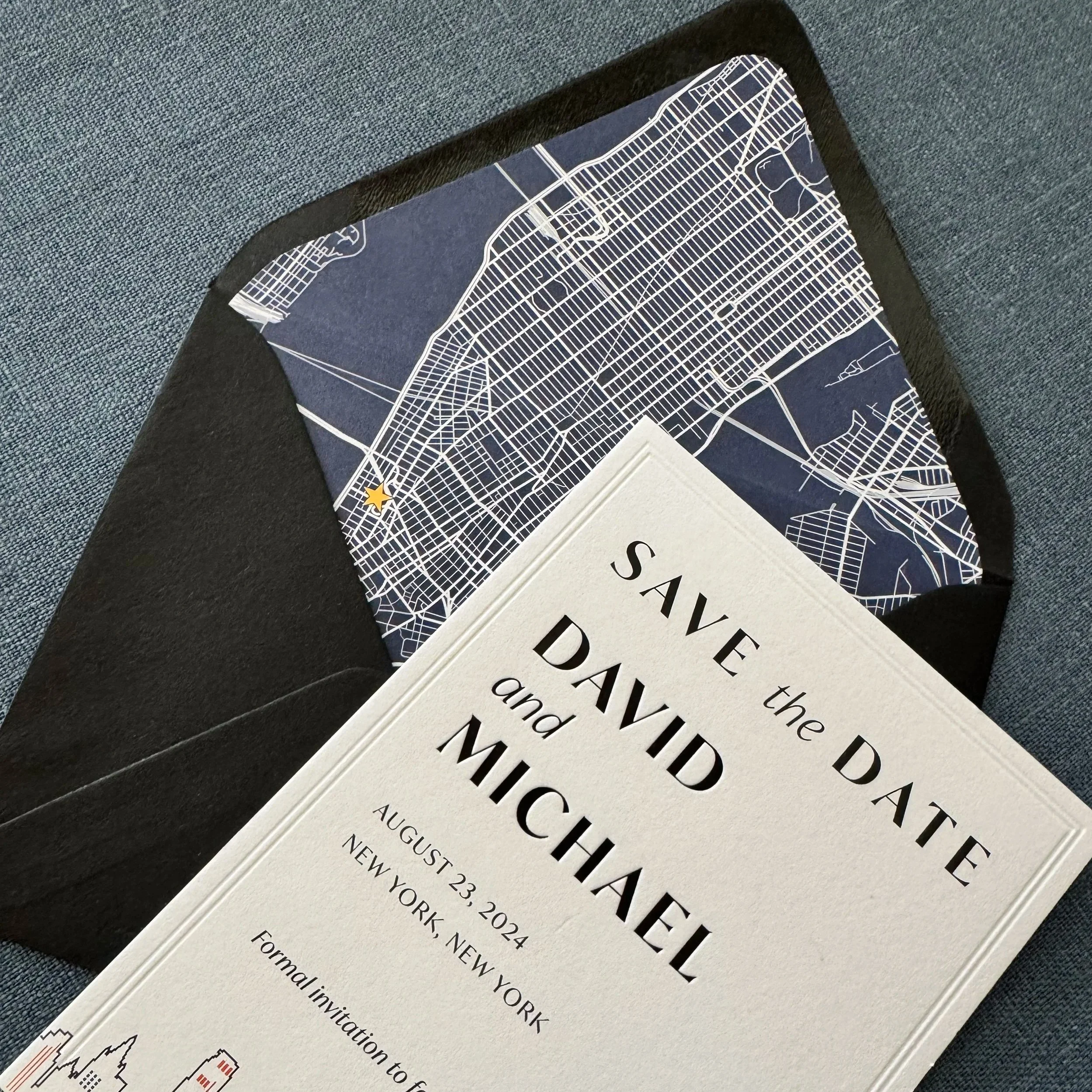
For destination weddings, or weddings where many guests will need to travel, Save the Dates play a practical role. They help guests anticipate flights, accommodations, and time off. In those cases, clarity around location (even if it’s just the city or region) matters more than decorative detail.
For local or semi-destination weddings, there’s often more flexibility. You may choose to design Save the Dates that focus on tone and timing rather than a specific venue name. This can be especially helpful if you’re still deciding between spaces or finalizing contracts.
The key is honesty with where you are in the planning process. Good design supports your reality, it doesn’t force decisions before you’re ready.
Your Guest Experience, Not Just Your Aesthetic
Save the Dates aren’t just about announcing a date. They’re the first piece of communication your guests receive, and they quietly set expectations.
Before designing, it helps to think about what your guests need to know early. Will many of them be traveling? Are accommodations limited? Is your wedding taking place during a busy season or holiday weekend?
Beyond logistics, Save the Dates also establish an emotional tone. Formal or relaxed. Romantic or modern. Understated or expressive. This doesn’t mean everything needs to be decided now, but it does help to have a general sense of how you want guests to feel when they open the envelope or read the message.
Timing (and why earlier isn’t always better)
One of the most common questions couples ask is when to send save the dates. While there are general guidelines, earlier isn’t always better.
For destination weddings, Save the Dates are typically sent eight to twelve months in advance, giving guests adequate time to plan travel. For local weddings, six to eight months is often sufficient. Sending them too early can actually create confusion—guests may misplace them, forget details, or assume information will change.
It’s also worth considering how much information you truly have at the time you send them. If your wedding website is still evolving or key details are in flux, waiting a bit can allow you to include the most important information upfront, resulting in clearer communication and fewer follow-up questions later.
Thoughtful timing is less about rules and more about readiness.
How your Save the Dates Relate to Your Invitations
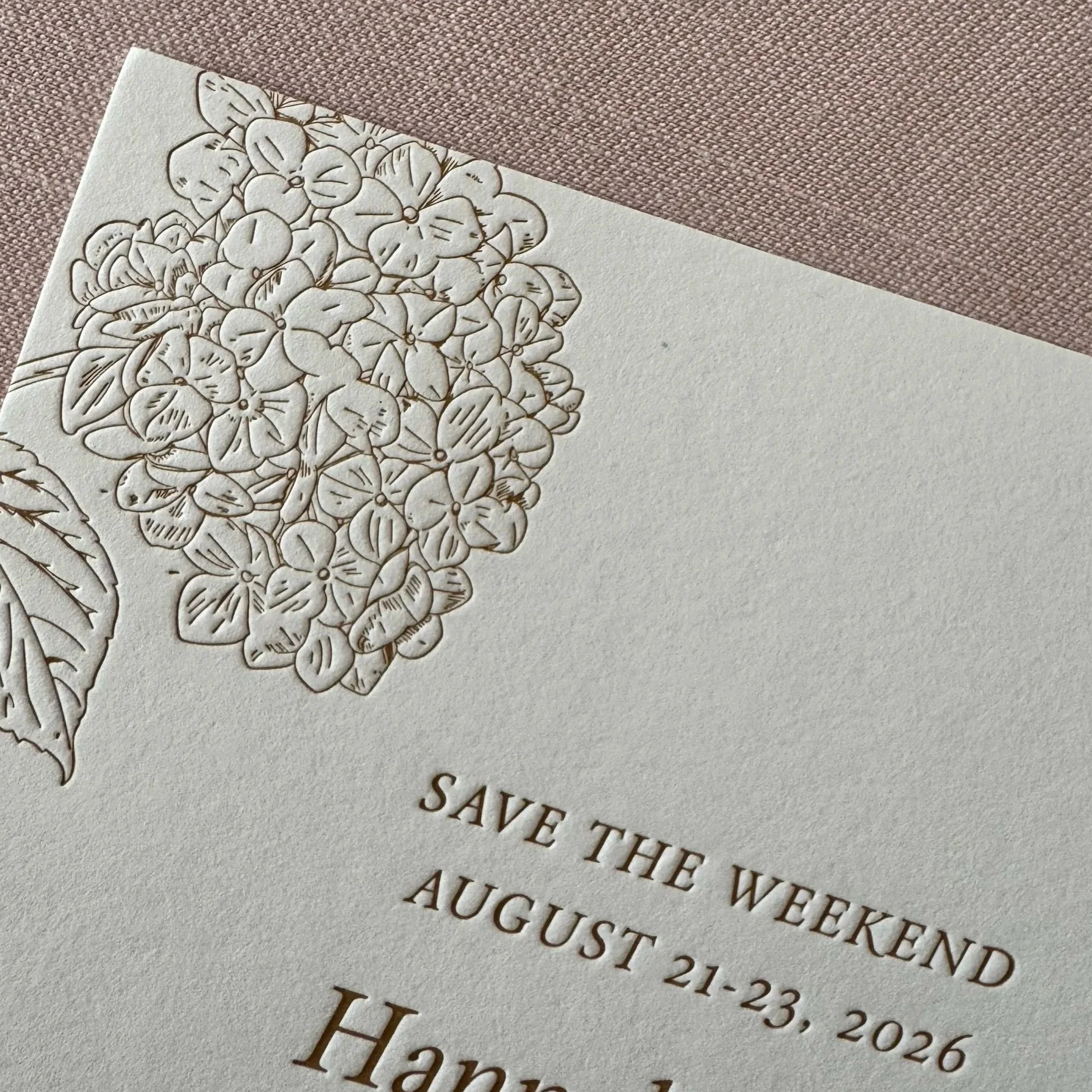
Another helpful thing to consider early is how your Save the Dates will connect to your invitation suite. When working with couples on custom-designed wedding stationery, I like to hold a loose invitation plan in mind while designing the Save the Dates. This might mean carrying through a typestyle, color palette, or subtle design element that will reappear across the invitations and wedding day details. Everything doesn’t need to match exactly. What matters is cohesion. I often say that cohesion isn’t about matching, it’s about recognition.
Save the Dates don’t need to include every detail. They don’t need to lock in your entire design direction. They simply need to feel aligned with where your wedding is headed. Thinking of your stationery as a journey, rather than a single decision, often leads to more cohesive and less stressful results.
What You Don’t Need to Decide Yet
This may be the most reassuring part of the process. Before designing Save the Dates, you do not need to decide:
- final paper weight
- embellishments or special finishes
- exact invitation wording
- print methods for your full suite
- every visual detail of your wedding
Those decisions come later, once more information is in place and once you’ve had time to live with your ideas. Save the dates are an opening note, not the entire story.
A Thoughtful Beginning Makes Everything Else Easier
When you feel rushed into early decisions, wedding stationery can quickly start to feel overwhelming. But when you feel guided, it often becomes one of the most grounding parts of the planning process. Taking a bit of time to clarify a few foundational elements: your location, your guest experience, your timing, and your overall direction, creates space for better design and a smoother experience later on. There isn’t a single “right” order for planning wedding stationery. There is, however, a thoughtful one. And when you begin with clarity, the design tends to fall into place naturally.
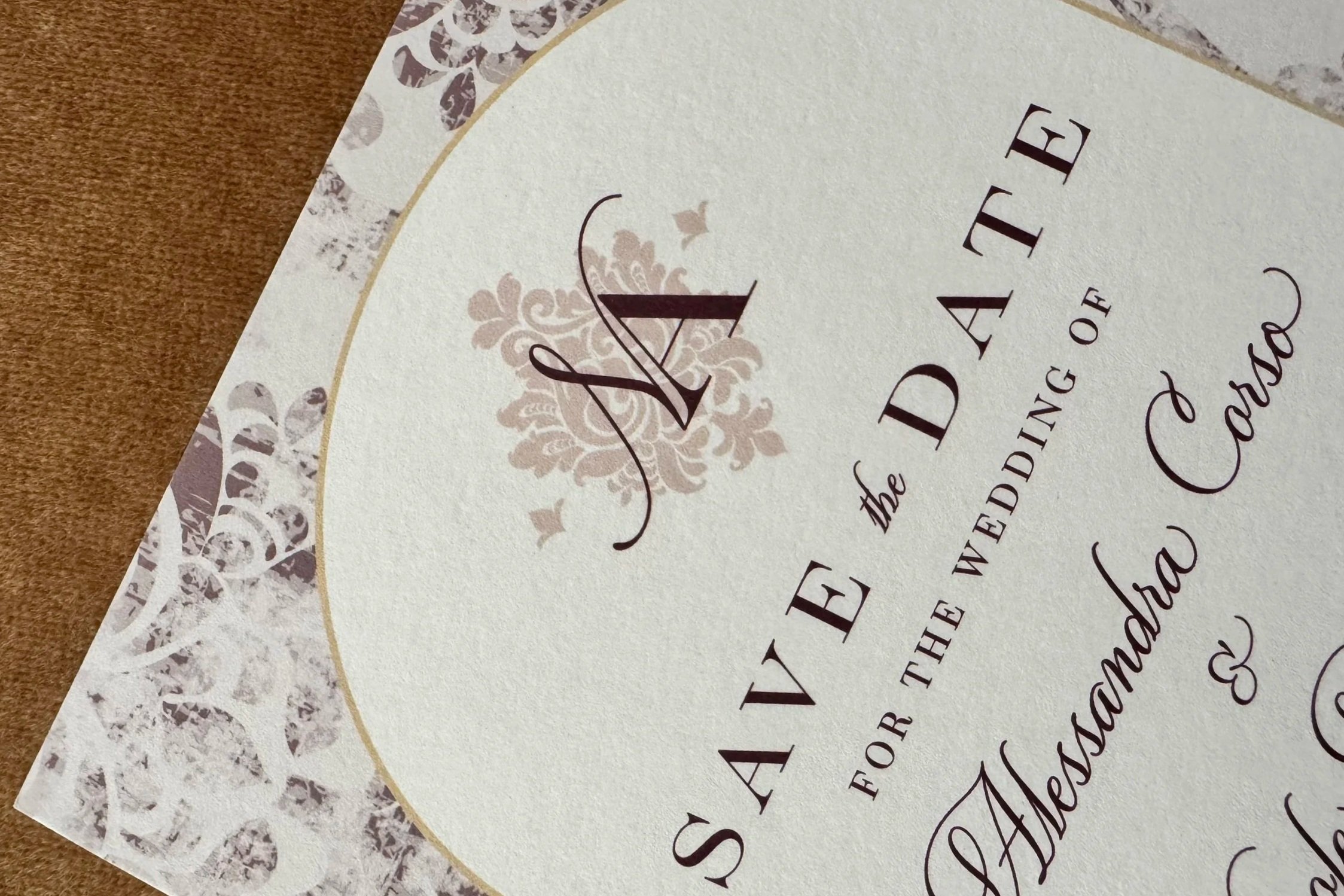
If you’re early in the planning process and want guidance before making design decisions, I offer a complimentary discovery call to help you think through timing, direction, and what makes the most sense for your wedding.